-
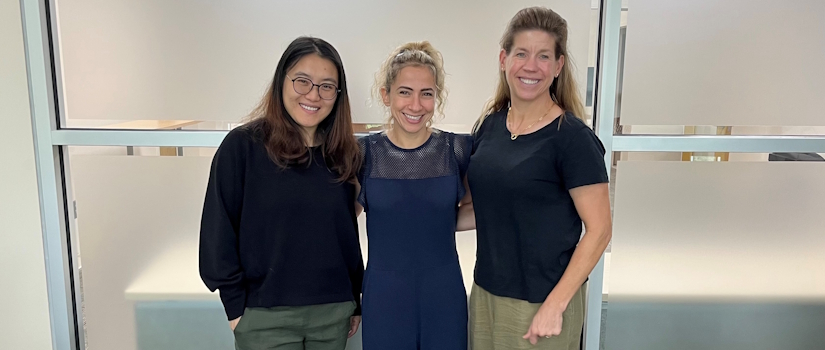
Dr. Camilla Wenceslau, Associate Professor, School of Medicine
Mentors: Leonardo Bonilha, Nabil Natafgi
Structural Barriers to Hypertension Treatment and Cognitive Health in Underserved
SC
This project will leverage the Aging Brain Cohort at the University of South Carolina
to assess blood pressure, medications, cognitive function, and social and demographic
factors in South Carolina residents. We will examine how blood pressure treatment
and non-medical drivers of health such as income, education, and access to healthcare
are related to cognitive health. We will also compare these findings with national
data. Our goal is to better understand who is at greatest risk and identify barriers
that may prevent people from benefiting from effective blood pressure treatment. Ultimately,
this work aims to guide strategies to improve hypertension care and reduce dementia
risk, particularly in underserved communities in South Carolina.
-
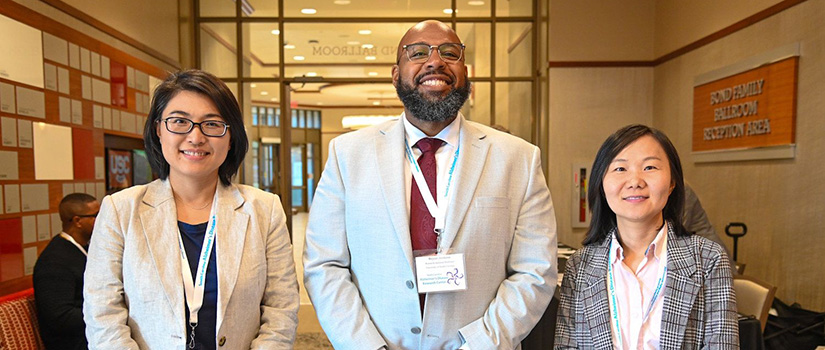
Dr. Kristen Weaver-Toedtman, Assistant Professor, College of Nursing
Mentors: Lorie Donelle, Susan Steck
COMMAND Trial: Cognitive Optimization via the Microbiome and Mitochondria; Activity
and Nutrition Drivers
The purpose of this pilot study is to engage community members and advance research
on aging and the brain-gut-microbiome (and movement) axes. In collaboration with community
partners, we will investigate diet and physical activity, while exploring social and
structural factors that influence engagement in such health-related behaviors. We
will conduct a virtual study with psychosocial-based assessments, remote biospecimen
collection, and capture longitudinal symptoms, dietary intake, and physical activity
among 20 adults, aged 50-70 years, who reside in the state of South Carolina. Our
overall objective is to assess feasibility and gain insights on the associations between
cognition, diet, physical activity, gut microbiota metabolites, and indices of mitochondrial
function, with the long-term goal of leveraging such insights to inform therapeutic
interventions.
-
Dr. Fan Yang, Associate Professor, Journalism and Mass Communications
Mentors: Juan Caicedo, Shaun Owens
CARE-AI: Care Assistance through Robot-Embodied Artificial Intelligence for Dementia
Caregiving
CARE-AI implements and evaluates robot-embodied AI as a support intervention for dementia
caregiving dyads, addressing caregiver isolation, guilt, informational gaps, and patient
disengagement. In collaboration with Leeza's Care Connection, we designed a Reachy
Mini robot program with empathetic dialogue, caregiver affirmation, patient reminiscence
engagement, and health information delivery. Through participatory co-design with
key stakeholders, iterative AI development with a Community Advisory Board, and home
pilot deployment with 8-10 dyads, we will collect mixed-methods data on caregiver
burden, loneliness, user experience, and system usage to generate preliminary evidence
for future NIA funding and establish a scalable model for technology-mediated dementia
care support.